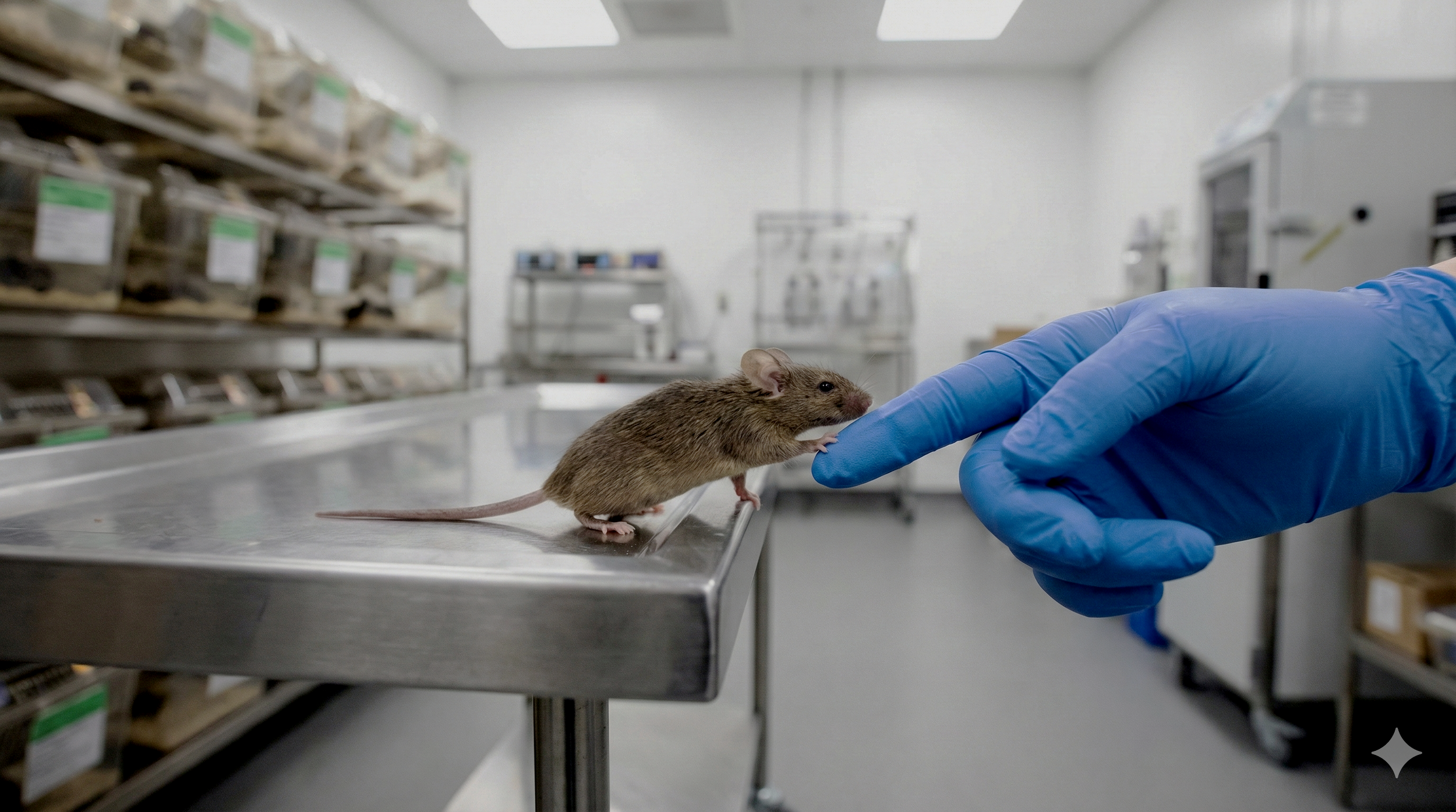
Standard mice yield standard results. It’s time to upgrade to a model that actually reflects your target patient.

A little more human. A lot more predictable.

For decades, the laboratory mouse has been the workhorse of biomedical research. But mice are not miniature humans. This fundamental biological discrepancy is a primary reason why nearly 90% of drugs that enter clinical trials ultimately fail.

Why Upgrade the Model?

Standard mice yield standard results. Humanized mice yield translatable data.

1. Superior Clinical Predictability Stop guessing if mouse data will translate to human patients. By testing therapeutics against human targets within a living system, you can identify viable candidates earlier and flag (immuno)toxic compounds long before they reach Phase I trials.

2. A Functional Human Immune System You cannot test a human immunotherapy on a mouse immune system. Humanized models allow for the reconstitution of key human immune cell populations (T cells, B cells, NK cells, myeloid lineages), enabling the study of complex interactions, cytokine releases, immune cell engagers, anti-drug antibodies and immune responses in real-time.

3. De-Risking Drug Development "Fail fast and cheap" is better than failing slow and expensive. By utilizing models that better mimic human pathology, you can prioritize the most promising leads and reduce the staggering financial risks associated with late-stage clinical attrition.

4. Personalized treatments What if you could develop your therapy for that specific patient population? By engrafting patient-specific cells with disease-specific dispositions, you can accurately model the development of immune-associated disease phenotypes that can be targeted.


Mouse Outline
Immune and Circulatory System
Immune Network
Liver
Liver

Humanized Mouse Model

Interact with the diagram on the left. Hover over the liver or the circulatory/immune network to explore the humanized capabilities of this in vivo model.

Humanized Liver

The murine liver is selectively repopulated with primary human hepatocytes. This provides an incredibly accurate model for studying human-specific hepatic metabolism, drug clearance, virology, and toxicology profiles.

Humanized Immune System

Engrafted with human hematopoietic stem cells (CD34+ HSCs) or PBMCs to develop functional human immune cell lineages. This network is essential for immuno-oncology research, infectious disease modeling, and evaluating immunotherapies.

A "humanized" mouse is an immunodeficient animal engrafted with functional human cells, tissues, or expressing human genes. They provide the physiological convenience of a small animal model with the biological complexity of the human immune system, offering a critical window into how human bodies will actually respond to novel therapeutics.

Engraftment Timeline

Drag the slider to visualize the development of the human immune system and liver reconstitution.

Week 0 Week 4-8 Week 12+
Immune Cells
Hepatocytes
100% 50% 0% Engraftment Level Wk 0 Wk 4 Wk 8 Wk 12 Wk 16 Current
Step 1

Pre-Conditioning & Injection

Conditioning clears native stem cells to create space. Human CD34+ hematopoietic stem cells or PBMCs are then introduced into the mice.

Step 2

Early Lineage Engraftment

Human cells colonize the bone marrow. Initial lineages like B-cells and NK cells appear as the immune system starts to establish.

Step 3

Maturity Reached

Engraftment stabilizes with up to 80% immune system reconstitution and 70% hepatocyte replacement, creating a robust model for clinical studies.

Therapeutic Case Studies

Select a research area to see how humanized models are accelerating discovery.

Oncology

Evaluating PD-1 Checkpoint Inhibitors in Solid Tumors

The Challenge
Testing human-specific immunotherapies requiring a functioning human T-cell response.
Model Used
Hu-PBMC NSG™ Mouse + Patient-Derived Xenograft (PDX).
The Outcome
Confirmed T-cell infiltration and significant tumor volume reduction compared to control.

Because standard murine models do not possess human PD-1 receptors, testing human checkpoint inhibitors requires a humanized immune system. In this study, adult human peripheral blood mononuclear cells (PBMCs) were engrafted into immunodeficient mice bearing a human non-small cell lung cancer (NSCLC) PDX. The model successfully demonstrated the efficacy of anti-PD-1 therapy by showing robust human T-cell activation and targeted tumor regression, providing crucial preclinical data prior to phase I human trials.

Autoimmune

Evaluating T-Cell Engagers for B-Cell Depletion in SLE

The Challenge
Testing bispecific antibodies that require simultaneous binding to both human T-cells and human B-cells.
Model Used
Hu-PBMC NSG™ Mouse (SLE Patient-Derived).
The Outcome
Profound T-cell mediated depletion of autoreactive B-cells and reduction in anti-dsDNA autoantibodies.

Systemic Lupus Erythematosus (SLE) is driven by pathogenic, autoreactive B cells. Emerging targeted therapies, such as CD19xCD3 bispecific T-cell engagers, aim to redirect T cells to eliminate these B cells. Because these drugs specifically bind human CD3 and human CD19 receptors, wild-type mice cannot be used. By engrafting highly immunodeficient mice with PBMCs from SLE patients, researchers created a functional, humanized in vivo model. Administration of the T-cell engager successfully triggered targeted cytotoxicity against the human B cells, leading to deep B-cell depletion and a significant decrease in lupus-associated autoantibodies.

Immunology

Preclinical Testing of Novel mRNA Vaccines

The Challenge
Evaluating human adaptive immune responses, specifically B-cell antibody generation and T-cell memory.
Model Used
BLT Humanized Mouse (Bone Marrow, Liver, Thymus).
The Outcome
Generation of robust human IgG neutralizing antibodies and specific CD8+ T-cell responses.

To predict human responses to a new mRNA vaccine candidate, researchers utilized BLT mice—which feature a completely functional human immune system educated in human thymus tissue. Following vaccination, the model exhibited human-specific dendritic cell antigen presentation, leading to a comprehensive adaptive immune response. The presence of high-affinity human neutralizing antibodies confirmed the vaccine's translational potential.

Virology

HIV-1 Latency and Eradication Strategies

The Challenge
Mice cannot naturally be infected with HIV-1, making in vivo studies of viral reservoirs impossible in standard models.
Model Used
Hu-HSC NSG-SGM3 Mouse.
The Outcome
Establishment of a latent HIV reservoir and successful testing of "shock and kill" eradication agents.

Because HIV strictly targets human CD4+ T cells, studying the virus requires a humanized host. Using an NSG model expressing human cytokines (SGM3) to boost immune cell engraftment, researchers successfully infected the mice with HIV-1. After suppressing the virus with standard Antiretroviral Therapy (ART), they utilized the model to test novel latency-reversing agents (LRAs), proving the model's critical role in the search for an HIV cure.

Toxicology

Human Drug-Induced Liver Injury (DILI)

The Challenge
Standard mouse livers metabolize drugs differently, often failing to predict human hepatic toxicity.
Model Used
Hu-Liver Fah-/- Model (Human Hepatocyte Engrafted).
The Outcome
Accurate prediction of human-specific toxic metabolites that were missed in standard wild-type screening.

To test a novel therapeutic with potential liver toxicity, a humanized liver model was employed. The murine liver cells were largely replaced by functional human hepatocytes expressing human CYP450 enzymes. When administered the drug, the humanized model produced human-specific toxic metabolites identical to those seen in clinical data, demonstrating the model's superiority for safety screening and pharmacokinetics.

Timing Your Breakthrough

Growing a multi-lineage human immune system from scratch isn't an overnight job, but the data is worth the wait.

When it comes to humanizing a mouse, researchers generally face a choice. You can inject mature adult human immune cells (PBMCs) for a fast-tracked model. However, because those mature cells immediately recognize the mouse host as foreign tissue, PBMC models rapidly develop fatal Graft-versus-Host Disease (GvHD). This severely limits your study window to just a few short weeks.

If your research requires long-term tumor growth, vaccine evaluation, or a stable, comprehensive immune system, you need CD34+ HSC Engraftment.

Ready to obtain First in Humanized mouse data?